The problem: the first pour of the night is all foam, the second tastes off and the third sprays across the drip tray. A draft system looks simple from the customer’s side of the bar, but it is a chain of parts that all have to work together: keg, coupler, gas, regulator, lines, faucet and cooler. When one link is wrong, the beer suffers. This guide explains how each part works, what to ask before you buy and why cleaning matters so much.
This is general information about draft equipment. Gas lines and refrigeration should be installed by a qualified professional, and every operator should follow the manufacturer’s instructions and local laws on the sale of alcohol.
How a draft system works
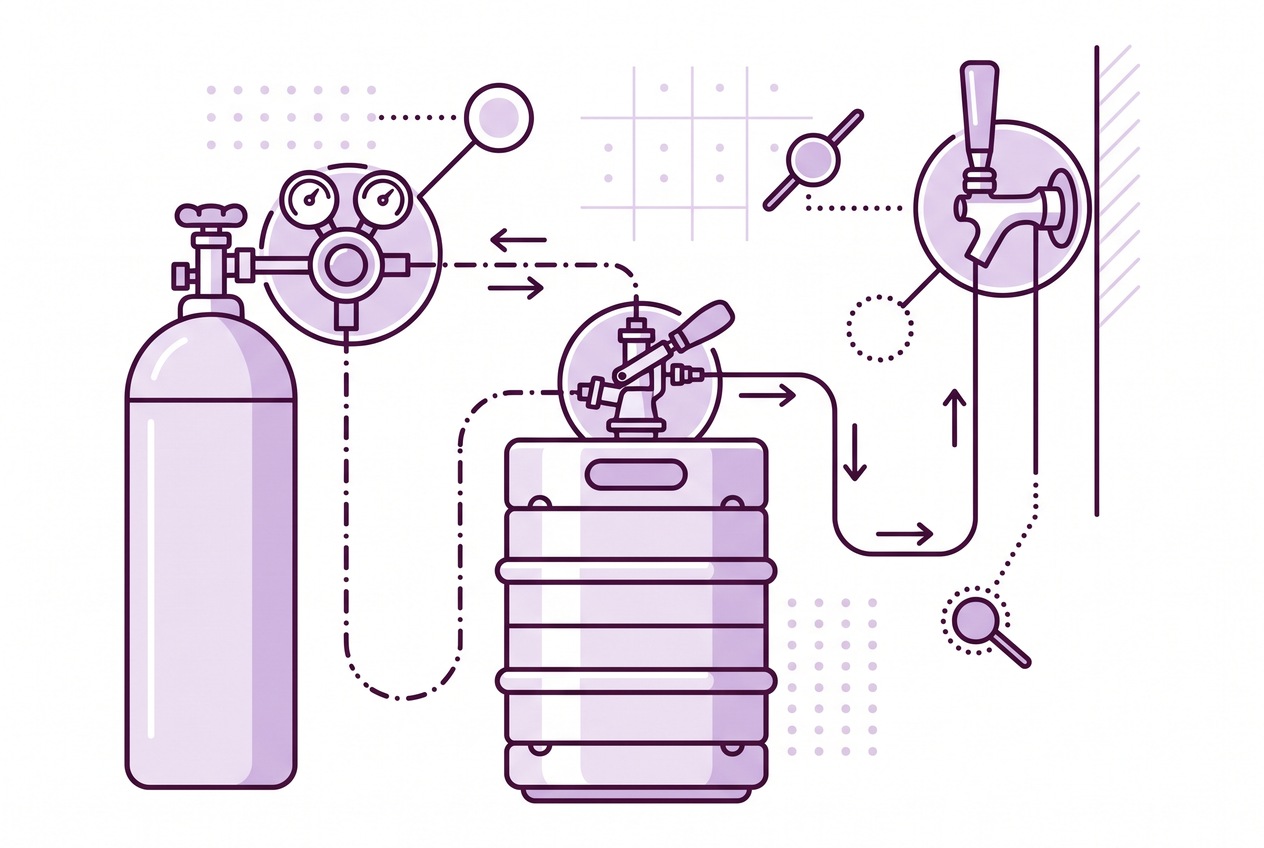
Beer is pushed from the keg through a line to a faucet by gas pressure. The beer stays cold in the cooler, travels through a line to the tap and pours when the faucet opens. The gas pressure, the line length and the temperature all affect how the beer pours and tastes.
Kegs and couplers
Kegs come in standard sizes. A half-barrel holds about 15.5 gallons, a quarter-barrel about 7.75 gallons and a sixtel about 5.2 gallons. Smaller kegs suit slow sellers and let you offer more varieties in less space.
A coupler attaches to the keg and connects the gas and beer lines. The most common type in the United States fits many domestic and imported kegs, though some breweries use other types. Check which coupler each keg needs.
Gas and regulators
Most draft beer uses carbon dioxide, and some dark beers use a blend of nitrogen and carbon dioxide. The gas pushes the beer out and keeps it carbonated. A regulator sets the pressure so the beer pours well. Too much pressure causes foam, and too little makes the pour slow and flat.
Carbon dioxide can displace air in a confined space. A leak in a walk-in cooler or a small room can create a hazard, so many operators install a carbon dioxide alarm and follow safety guidance for storing gas cylinders.
Lines and balance
The beer line connects the keg to the faucet. The length, diameter and material of the line affect how the beer flows, and a balanced system pours smoothly. A line that is too short or too wide allows beer to rush and foam. Long runs from a distant walk-in cooler may need a glycol cooling system to keep beer cold on the way.
Choose lines designed for beer, and replace them on a schedule. Old lines can retain flavors and hold bacteria.
Faucets and towers
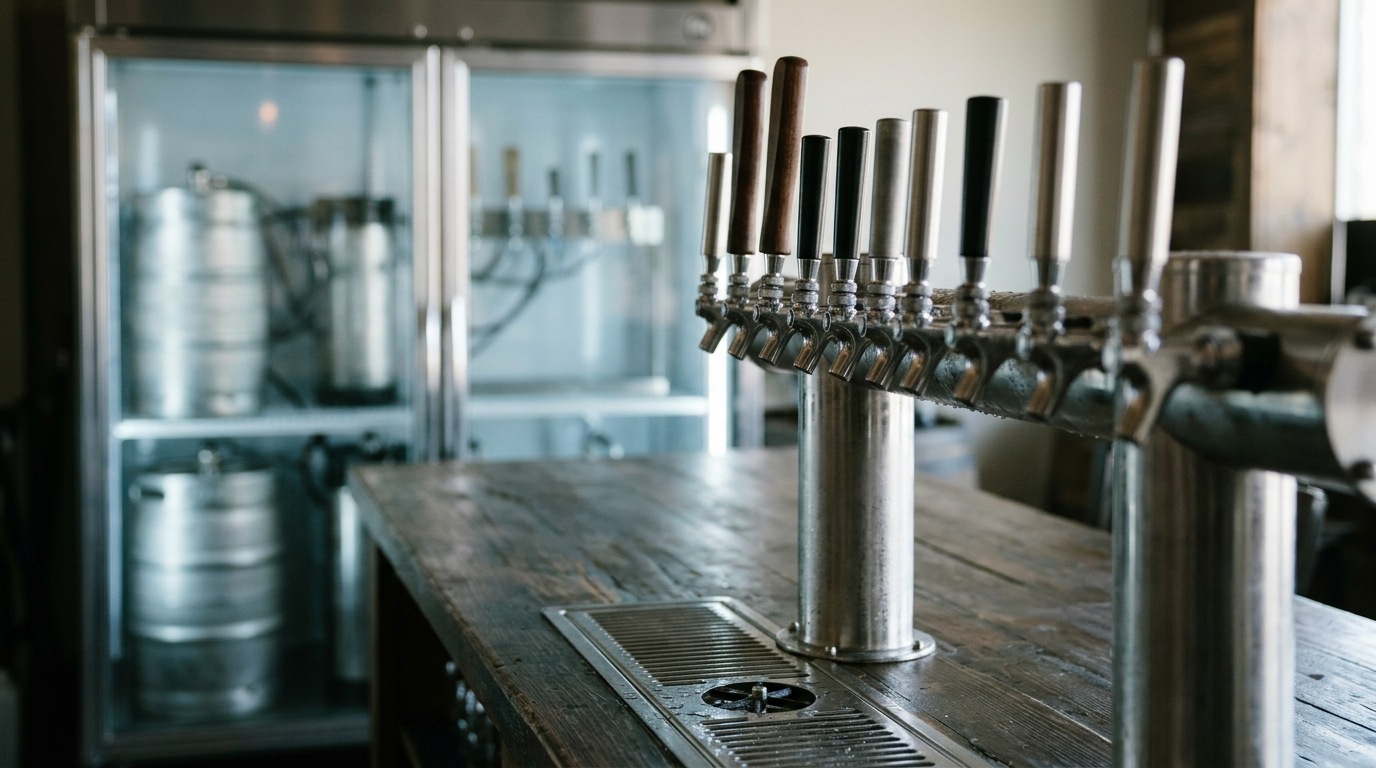
The faucet is the part guests see. Standard faucets pour smoothly for most styles. Specialty faucets exist for beers served with a foamy head. The tower holds the faucets on the bar and carries the lines to the cooler. Towers come in different heights and numbers of taps. Choose a tower that fits the bar and the number of beers you plan to offer.
Cooling
Beer is usually served cold, commonly around the high thirties Fahrenheit. A walk-in cooler with a direct line to the taps works well for larger operations. A kegerator, which is a refrigerator built for kegs, suits smaller bars and restaurants. Check that it holds the number of kegs you need and keeps a steady temperature.
| Component | Role | What to check |
|---|---|---|
| Keg and coupler | Holds and releases beer | Correct coupler for each keg |
| Gas and regulator | Pushes beer and sets pressure | Safe storage, proper pressure |
| Beer line | Carries beer to the faucet | Length, diameter and material |
| Faucet and tower | Pours the beer | Number of taps and style |
| Cooler | Keeps beer cold | Capacity and temperature stability |
Cleaning
Draft lines need regular cleaning. Beer leaves yeast, mold and mineral deposits in the line, which can spoil the taste and cause foam. Industry guidance, such as the Brewers Association’s draft quality guidelines, generally recommends cleaning lines about every two weeks. Follow the schedule recommended by your supplier or the brewery.
Cleaning involves flushing the lines with a cleaning solution, rinsing thoroughly and checking faucets and couplers. Keep a log of dates and who did the work.
Ordering kegs and managing inventory
A half-barrel keg holds about 1,984 fluid ounces, which is roughly 124 pints at 16 ounces each, before waste from foam and line loss. Real yield is lower, so track how many pints each keg actually sells. Compare the yield with the price of the keg to understand the cost of each pour.
Keep the oldest kegs at the front and use them first. Beer is perishable, and unfiltered or lighter styles can fade quickly. Don’t order more than you can sell within the brewery’s recommended window. Record the delivery date on each keg and rotate stock like any other fresh product.
Common problems
- Foamy pours: too much pressure, warm beer or dirty lines.
- Flat beer: low pressure or a gas leak.
- Off tastes: dirty lines or old beer.
- Slow pour: a clogged line or low pressure.
Questions to ask before you buy
- How many taps do I need, and what keg sizes will I use?
- Does the system use a kegerator, a walk-in or a glycol setup?
- What coupler types do my kegs require?
- Who will install it, and who will service it?
- What cleaning supplies and schedule does the supplier recommend?
Wrap-up
A draft system is a chain of parts that must work together. Choose the keg sizes and cooler that suit your volume, install gas and lines with a professional and clean the lines on schedule. Good equipment and regular care make the difference between a great pour and a wasted keg.