The problem: it is eight o’clock on a Saturday, the bin is empty, and the machine that looked big enough on the spec sheet is still making ice. Ice is the one ingredient in every drink, and running out of it stops service faster than almost anything else. Choosing an ice machine is therefore a sizing exercise first and a shopping exercise second. This guide explains how to estimate your ice needs, how machine types and cube styles differ and what water and placement do to performance.
This is general information about commercial equipment. Installation involving water, drains and electrical connections should be handled by a qualified professional, and every operator should follow the manufacturer’s instructions and local codes.
Estimate how much ice you need
Start with your busiest day, not your average one. Count the number of customers or drinks at peak and multiply by the ice each one uses. Industry rules of thumb are often quoted in pounds of ice per customer per day, with restaurants near the low end, bars higher and venues with large cold drinks higher still. Treat those figures as a starting point and adjust for your menu.
Then add a margin. Ice is also used for chilling bottles, filling wells and blending drinks. A machine that only just meets your estimate will fall behind on a hot night.
A worked example
Suppose a bar expects about 200 guests on its busiest night and uses roughly 2 pounds of ice per guest. That is about 400 pounds in a day. Add a margin of 25 percent for chilling bottles and hot weather, and the target becomes about 500 pounds. A machine rated for 500 pounds per 24 hours under test conditions may produce noticeably less in a warm room, so a unit rated higher, with a bin large enough to hold the rush, is a safer choice. The numbers here are an illustration only, so replace them with your own counts.
Production versus storage
Two numbers matter. Production is how many pounds of ice the machine makes in 24 hours. Storage is how many pounds the bin holds. A large bin gives you a buffer during rushes, while high production refills it between rushes.
Rated production is measured at standard conditions, often around 70 degrees Fahrenheit air and 50 degrees water. In a hot bar back area with warm incoming water, actual output can be much lower. Check the maker’s performance chart for the conditions you expect.
| Spec | What it tells you | What to check |
|---|---|---|
| Production per 24 hours | Ice made under test conditions | Output at your room and water temperatures |
| Bin capacity | Ice held ready for service | Enough to cover the busiest rush |
| Machine type | How the unit is built | Fit for the space and the bin |
| Condenser type | How the unit sheds heat | Airflow, water use and noise |
| Cube style | Shape and density of ice | Suited to your drinks |
Machine types
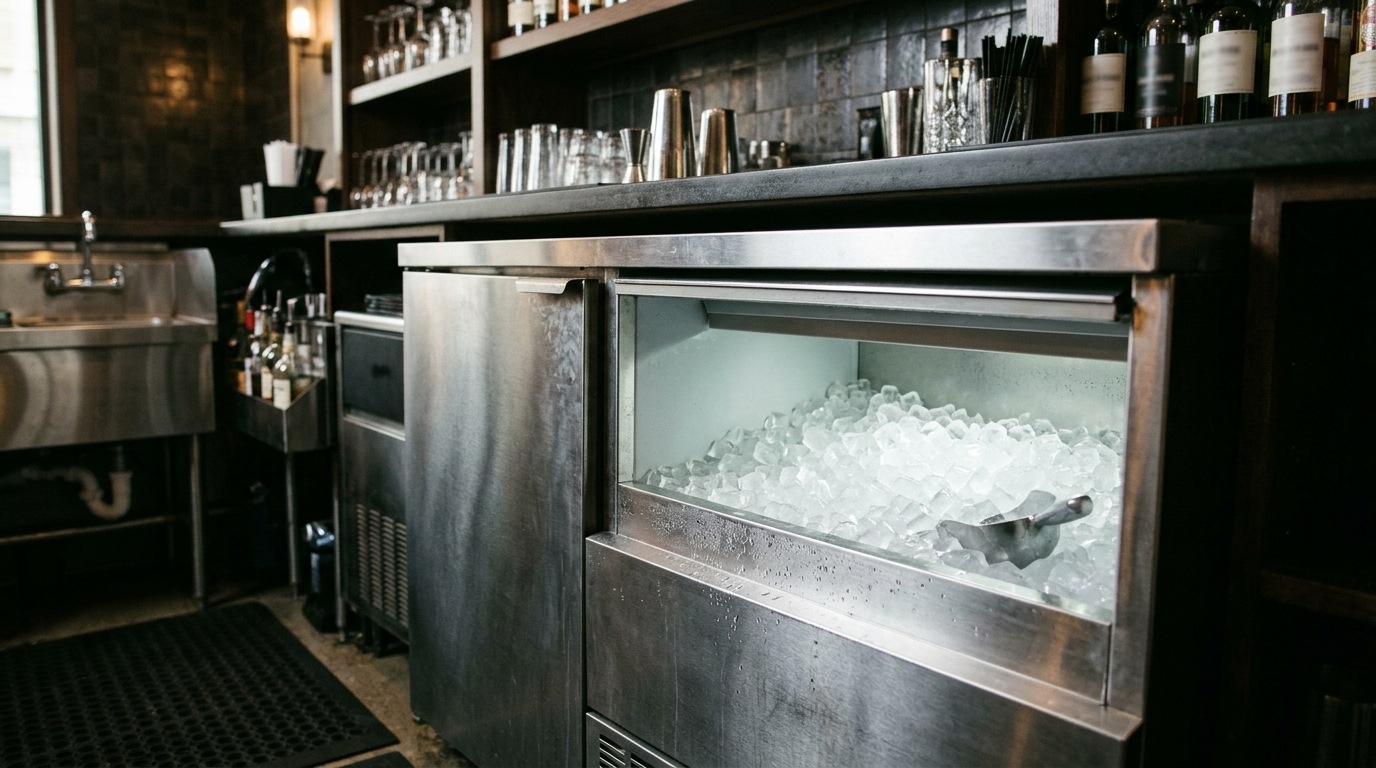
- Undercounter: the machine and bin are in one unit that fits below a counter. It suits small bars and cafes with modest demand.
- Modular (head): the ice-making head sits on top of a separate bin. It suits high volume, and you can change the bin to match your storage needs.
- Countertop dispenser: makes and dispenses ice at the point of use, common for cafes and self-serve areas.
Choose the type that fits both your demand and your space.
Cube styles
- Full cube and half cube: dense, slow-melting cubes that suit mixed drinks and sodas.
- Flake: soft ice that fills a glass and suits blended drinks and displays.
- Nugget (pebble): chewable ice that absorbs flavor and is popular for fountain drinks.
- Gourmet or octagon: large, clear cubes used in higher-end cocktails.
Dense cubes melt slowly and dilute drinks less. Softer ice cools fast and packs tightly. Match the style to your menu.
Air-cooled or water-cooled
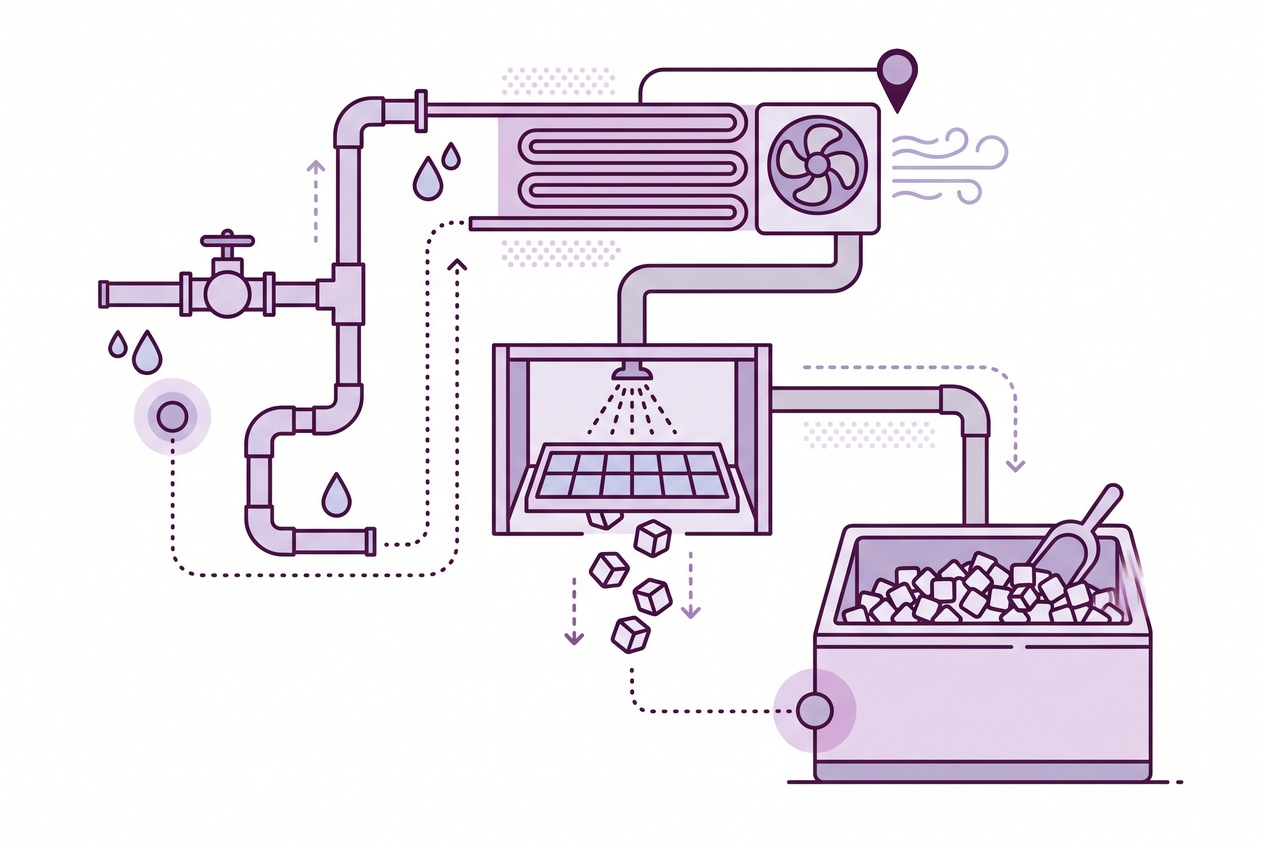
Air-cooled machines use fans to carry heat away. They are less costly to run, but they need clearance around the unit and do not perform well in hot rooms. Water-cooled machines use water to carry away heat. They can cope with hot spaces, but they use much more water, and some areas restrict them. Remote-cooled models place the condenser away from the machine, which helps in tight or hot spaces.
Water quality
Ice is only as good as the water that makes it. Hard water leaves scale on the evaporator, which cuts output and shortens the life of the machine. Taste and odor in the water carry over into the ice. A filter designed for ice machines removes sediment and chlorine and can help limit scale. Ask the manufacturer what filter and replacement schedule it recommends.
Placement and clearance
Place the machine where air can flow and where staff can reach the bin. Allow clearance on the sides and back as the maker specifies. Avoid placing it next to a heat source such as a fryer or a dish machine. Make sure there is a drain nearby and that the floor can carry the weight of a full bin.
Cleaning and maintenance
Ice touches the drink, so cleanliness matters. Many makers recommend cleaning and sanitizing on a regular schedule, commonly about every six months, along with checking filters and wiping the bin. Check your manual for the exact schedule and procedures. Use the scoop that comes with the machine, never a glass, which can break and contaminate the ice.
Questions to ask before you buy
- What is the output at my room and water temperature?
- What bin size does my rush require?
- Is the unit air-cooled or water-cooled, and what clearance does it need?
- What water filter does the maker recommend?
- What is the warranty on the compressor and parts?
Wrap-up
Estimate your busiest day, size the machine for production and storage, choose the cube style that matches your drinks and plan the water, drain and airflow before delivery. A machine sized and placed well keeps service moving all night.