The problem: a new cafe buys a handsome espresso machine, puts it on a counter that is too shallow, forgets the water filter and finds the shots are inconsistent because the grinder is fighting the room. Espresso equipment works as a system. The machine, the grinder, the water and the layout each affect the others. This guide explains the parts of a cafe beverage station, what to compare when you shop and how to plan space and utilities before the equipment arrives.
This is general information about commercial equipment. Plumbing and electrical connections should be handled by a qualified professional, and every operator should follow the manufacturer’s instructions and local codes.
The parts of a station
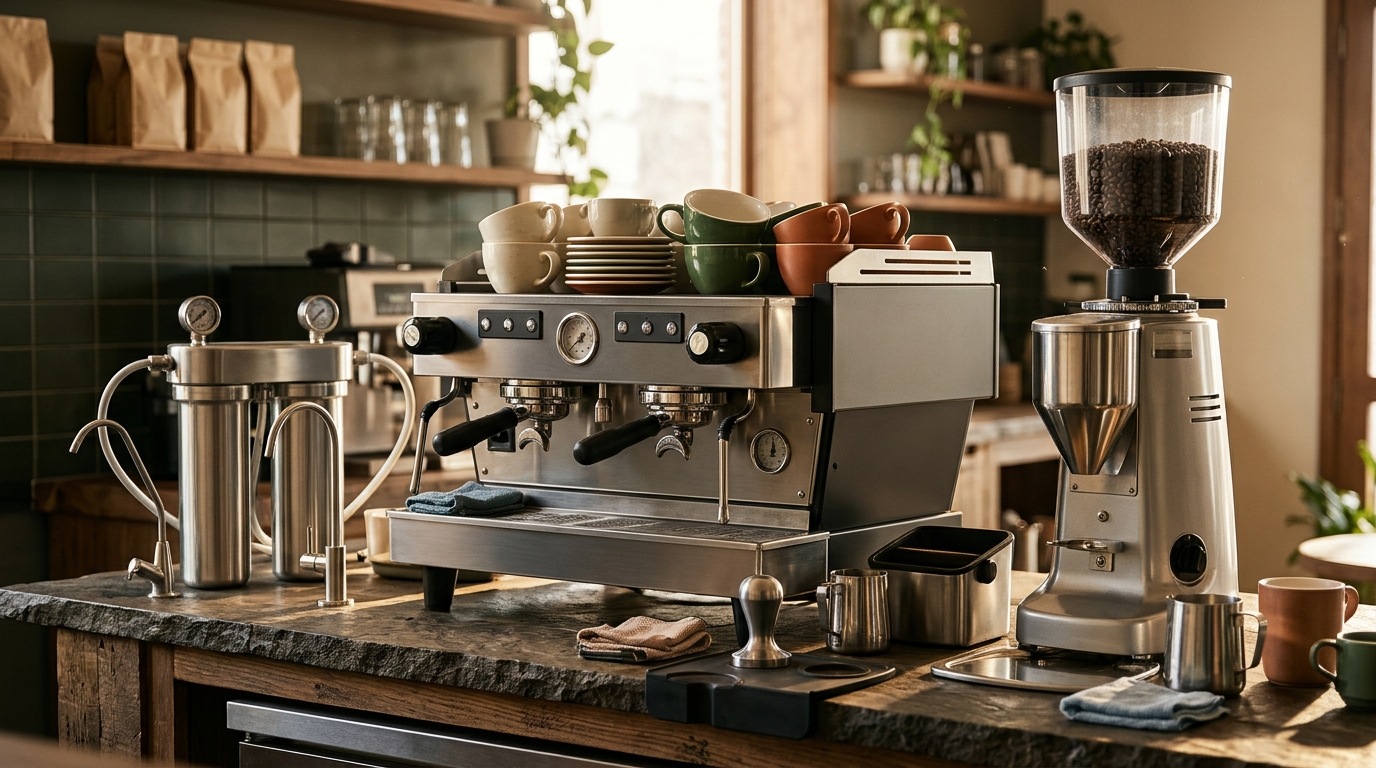
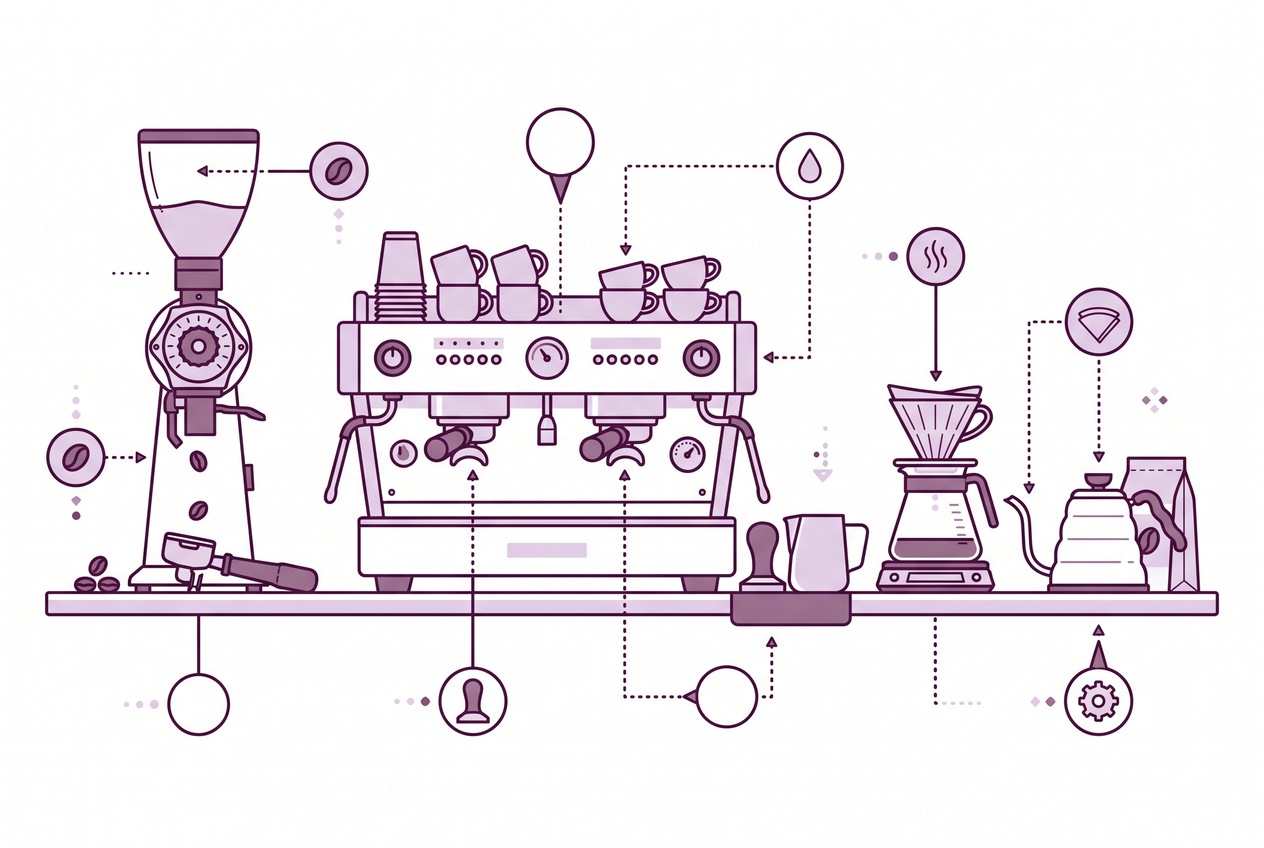
A typical cafe beverage station includes:
- An espresso machine.
- One or more grinders.
- A water filtration system.
- A tamping area and a knock box for used grounds.
- Steaming pitchers, thermometers and cleaning tools.
- Refrigeration for milk and syrups.
- Storage for cups, lids and sleeves.
Plan the flow from grinding to brewing to serving so that staff move in a short, simple path.
Choosing an espresso machine
Espresso machines come with one, two or three groups, which are the heads where portafilters lock in. More groups allow more drinks at once. A small cafe may do well with two groups, and a busy shop may need three.
Boiler design matters too. Heat exchanger machines make steam and brew water from one boiler, which suits many cafes. Dual boiler machines have separate boilers for brewing and steam, which gives steadier temperatures when both are used at once. Some machines offer programmable doses, called volumetric control, which helps keep shots consistent across staff.
Choosing a grinder
A commercial grinder should produce a consistent grind and adjust finely. Larger burrs run cooler and grind faster, which suits high volume. Grind-on-demand models grind each dose as needed, while doser models hold ground coffee in a chamber. Many cafes prefer grind-on-demand for freshness.
Consider the noise level, the hopper size and how easy the grinder is to clean. Plan for a second grinder if you offer decaf or a second blend.
Water filtration
Water makes up most of a cup of espresso, and it affects both taste and equipment. Hard water leaves scale on boilers and heating elements, which can shorten the life of the machine. Poor water can also taste flat or harsh.
Ask your supplier to test your water and recommend a filter or softener suited to the machine. Replace filters on schedule, and note the date on the unit. Check what the machine maker requires, since some warranties depend on proper water treatment.
Plumbing and power
Plan the utilities before the machine arrives.
- Water: a direct line to the machine, or a reservoir you fill by hand.
- Drain: a drain for the machine and the drip tray.
- Power: many two-group and three-group machines need a dedicated circuit and may use higher voltage than standard outlets.
- Ventilation: space for air to move around the machine.
Hire a qualified professional to confirm that the electrical and plumbing meet code.
Counter space and layout
Check the depth and the length of the counter. A machine needs room for the portafilters to lock in, for cups to fit under the groups and for staff to move. Leave space for the grinder at a comfortable height near the machine. Keep a milk refrigerator close, ideally within a step.
| Zone | What it needs | What to check |
|---|---|---|
| Machine | Power, water, drain, clearance | Counter depth and ventilation |
| Grinder | Power, stable surface | Hopper height and noise |
| Water filter | Water line and space | Access for changing cartridges |
| Milk and syrups | Refrigeration | Distance from the machine |
| Waste | Knock box and trash | Easy reach, easy emptying |
Menu and workflow
Your menu shapes your equipment. A menu of espresso and milk drinks needs strong steaming power and a refrigerator close to the machine. A menu with batch-brewed coffee, tea and cold brew needs space for brewers, urns and storage. Think about the drinks you expect to sell in your busiest hour and how many staff will work the station.
Map the path of a typical order. The barista takes a cup, grinds, doses, brews, steams, pours and hands off the drink. Each step should flow in one direction, with the tools used for that step close at hand. If staff must cross each other to reach milk or syrup, rearrange the station before it becomes a habit.
Also plan for the peak hour. Two baristas at one machine need enough space for both to work. Add a second grinder or a separate station for brewed coffee if lines build.
Daily care
Espresso equipment needs daily attention. Backflush the group heads, wipe the steam wands after each use, empty and rinse the drip trays and clean the grinder regularly. Follow the maker’s descaling schedule. Keep a cleaning log, so tasks do not get skipped.
Training
Even a great machine produces uneven drinks without training. Teach staff to dose, tamp and time shots consistently, and to taste and adjust the grinder when beans or conditions change. Consistency across shifts builds a loyal customer base.
Questions to ask before you buy
- How many groups do I need for my peak hour?
- What boiler design suits my drink menu?
- What grinder size and style suit my volume?
- What are the water, drain and power requirements?
- What does the warranty cover, and who services the equipment?
Wrap-up
A cafe station works best when the machine, grinder, water and layout are planned together. Choose equipment that matches your volume, test and treat your water, confirm the utilities and train your team. A little planning before the delivery avoids costly fixes after it.