The problem: a bartender reaches for a bottle that is not where it should be, walks across the bar for ice and hunts for a jigger that is in the sink. Each detour costs seconds, and seconds add up across a busy night. A bar well that is stocked and arranged with care saves those steps and makes drinks more consistent. This guide covers the tools every bar needs, how speed rails work and how to lay out a well that keeps pace with your menu.
This is general information about bar equipment. Serve responsibly, check identification and follow local laws on the sale and service of alcohol.
What a speed rail does
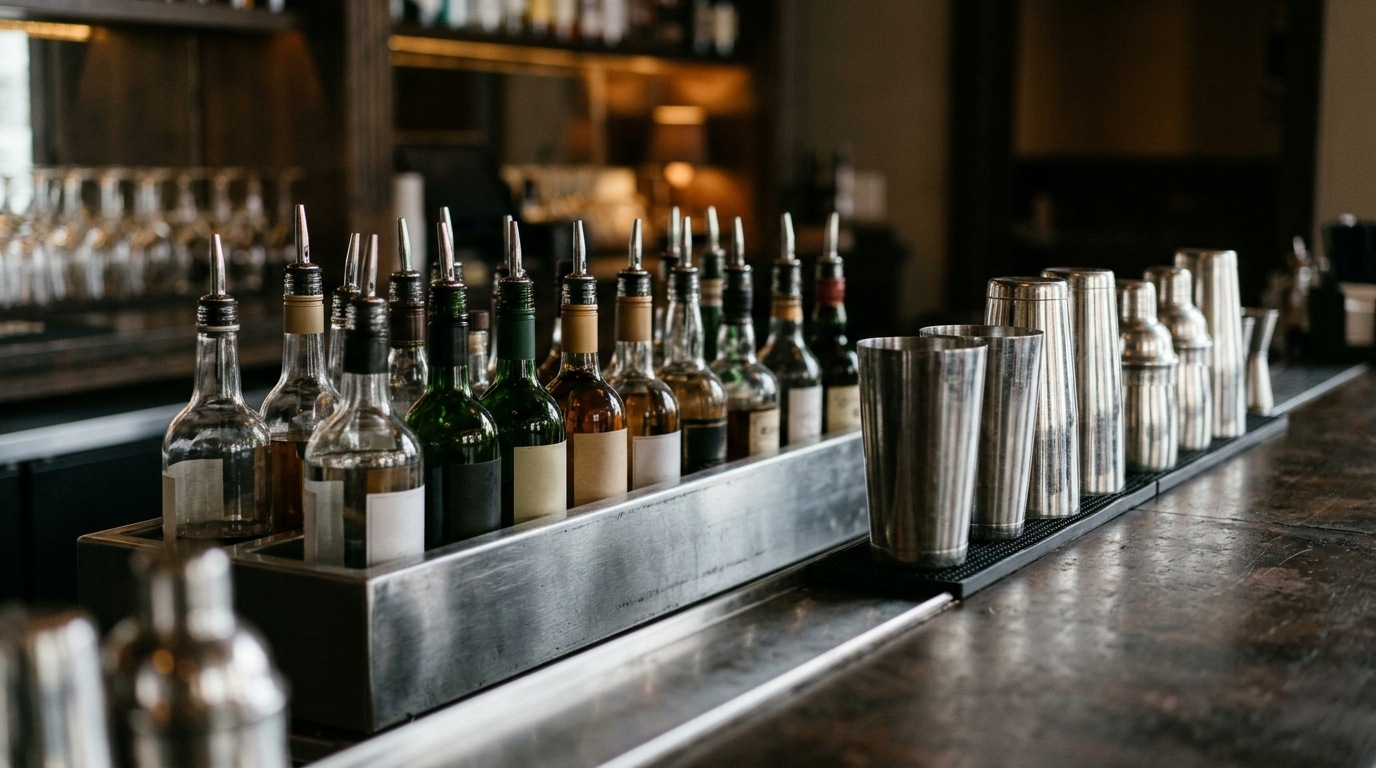
A speed rail, also called a speed rack, is a metal rail that holds bottles of frequently used liquor within easy reach of the bartender. It usually sits at the front of the bar well, just below the work surface. Rails come in different lengths, and the length decides how many bottles fit.
The bottles on the rail are chosen for the drinks you sell most. Placing them in the same order every shift lets staff reach them without looking, which speeds up service and reduces mistakes.
Pour spouts
Pour spouts fit into the neck of a bottle and control the flow. Free-flow spouts pour at a steady rate that bartenders learn to count. Measured spouts release a set amount. Both help keep pours consistent, which supports cost control and a reliable drink for the guest.
Choose spouts that fit the bottle necks you use, and replace them when the flow changes or the spout cracks. Keep spare spouts on hand, and wash them regularly to prevent sticky buildup.
Core bar tools
| Tool | Use | What to check |
|---|---|---|
| Jigger | Measures liquid for drinks | Sizes that match your recipes, clear markings |
| Shaker | Mixes and chills drinks | Seal, size and material |
| Strainer | Holds back ice and solids | Fit with the shaker, spring quality |
| Bar spoon | Stirs and layers drinks | Length that reaches the bottom of a tall glass |
| Muddler | Crushes herbs and fruit | Material that does not splinter |
| Ice scoop | Moves ice into glasses | Plastic or metal, never glass |
| Knife and board | Cuts garnish | Sharp blade, color-coded board |
Shakers
Common styles include the two-piece Boston shaker, the three-piece cobbler with a built-in strainer and the French style. Boston shakers are popular in busy bars because they are fast and durable. Check that the pieces seal tightly and release easily after use.
Strainers
A Hawthorne strainer has a coiled spring that fits over the shaker. A fine mesh strainer removes small pieces. Choose one that fits your shaker size.
Jiggers
Many bars use a double-sided jigger with two measures. Select one that matches the volumes in your recipes. Some jiggers have lines inside for several amounts.
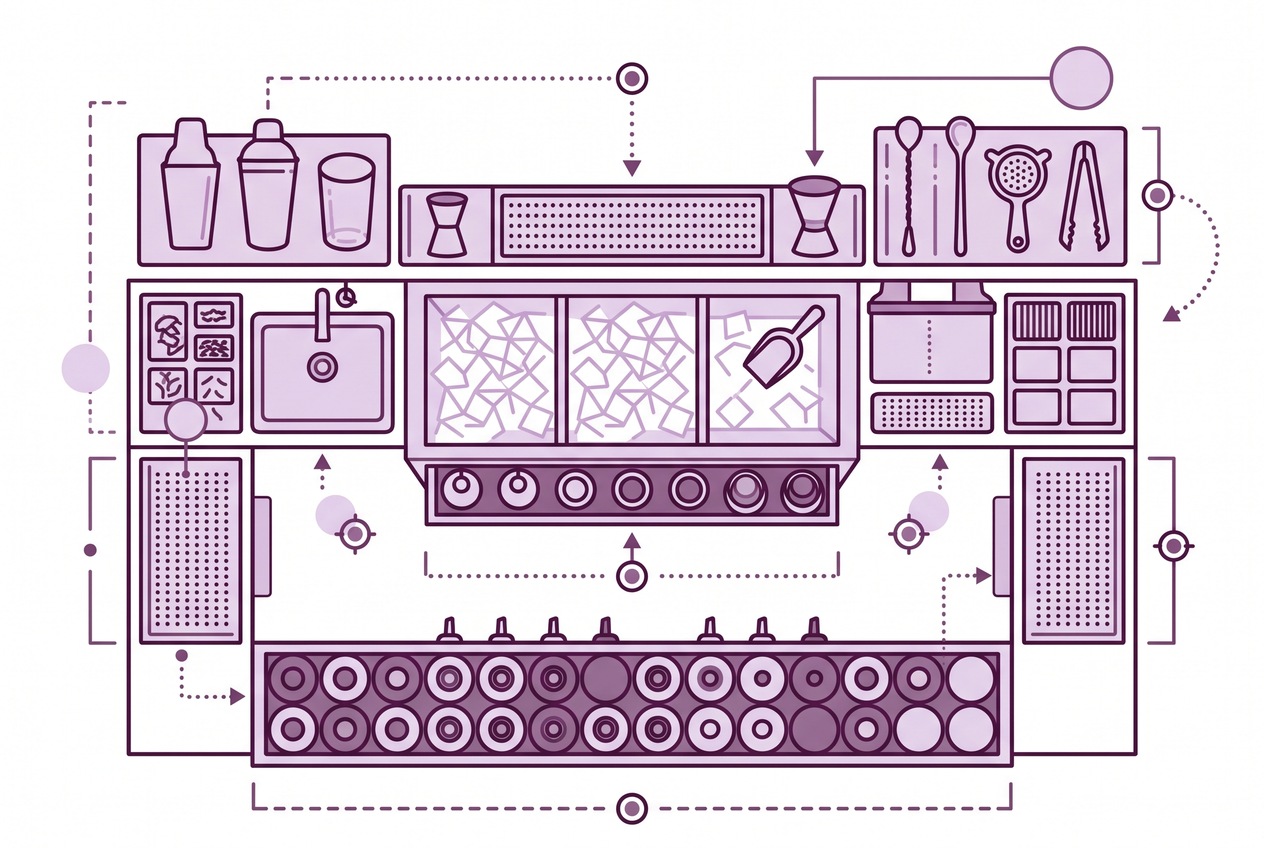
Designing the well
A good layout reduces steps. Place the most frequently used items within arm’s reach. A common arrangement is:
- The ice bin in the center of the well.
- Speed rails on both sides of the ice bin.
- Bottle wells or shelves for less used spirits within a short step.
- A glass rack above or beside the well.
- A sink and a sanitizing station within easy reach.
- Garnish trays on the work surface.
Think about left and right-handed staff, and about how many bartenders work at once. Two people working the same well need space to avoid collisions.
Materials and cleaning
Stainless steel is the standard for bar equipment. It resists corrosion and cleans easily. Plastic tools are lighter and quieter and suit glassware areas. Wooden tools can crack and harbor bacteria, so use them with care and replace them when they split.
Clean tools after each shift. Wash, rinse and sanitize according to local rules, and let them air dry. Keep a spare set so you can rotate during busy periods.
Garnish and glass prep
Garnishes slow service when they are not ready. Use a covered garnish tray with separate compartments for citrus, cherries, olives and herbs, and keep it within reach of the well. Prepare garnishes before opening, and cover them to keep them fresh. Use clean tongs rather than hands.
Glass storage matters as well. Racks that hold clean glasses upside down protect rims and keep dust out. Keep glasses at a comfortable height so bartenders do not stoop or stretch. Chill glasses only as the menu requires, and never use a glass to scoop ice, since a chip can end up in a drink.
Ergonomics
Bartenders spend hours on their feet. Anti-fatigue mats help, and a well at the right height reduces bending. Put heavy items at waist height. Keep walkways clear of hoses and mats that can cause trips.
Stocking up
Start with a core set, then add tools based on your menu. A bar that serves mostly beer and wine needs fewer tools than one with a long cocktail list. Count tools per bartender and add a few extras for breakage and cleaning.
Questions to ask before you buy
- Does the rail length fit the number of bottles I need?
- Are the tools stainless steel and easy to sanitize?
- Do the shaker pieces seal and release properly?
- Is the jigger marked clearly in sizes that match my recipes?
- What is the warranty or return policy?
Wrap-up
A speed rail, a good set of tools and a thoughtful layout make a bar faster and more consistent. Choose durable stainless tools, arrange the well around your most common drinks and keep everything clean and in its place. Small improvements in layout can make service smoother all night.